
A prospective, controlled study by the Faculty of Veterinary Medicine, University of Lisbon, presented at the 36th ECVIM-CA Congress (Berlin, 2026), provides the first controlled clinical evidence on WePaticare® combined with ursodeoxycholic acid (UDCA) in dogs.
Chronic hepatitis accounts for around 66% of primary hepatitis cases in dogs, and up to 20% of these are subclinical. Often, the only clue is elevated liver enzymes on routine bloodwork. Hepatoprotective therapy is used almost universally as adjunct treatment in these cases, but controlled clinical evidence to support it has been lacking.
This is the gap the University of Lisbon study, funded by Wepharm, set out to address.
How the study was conducted
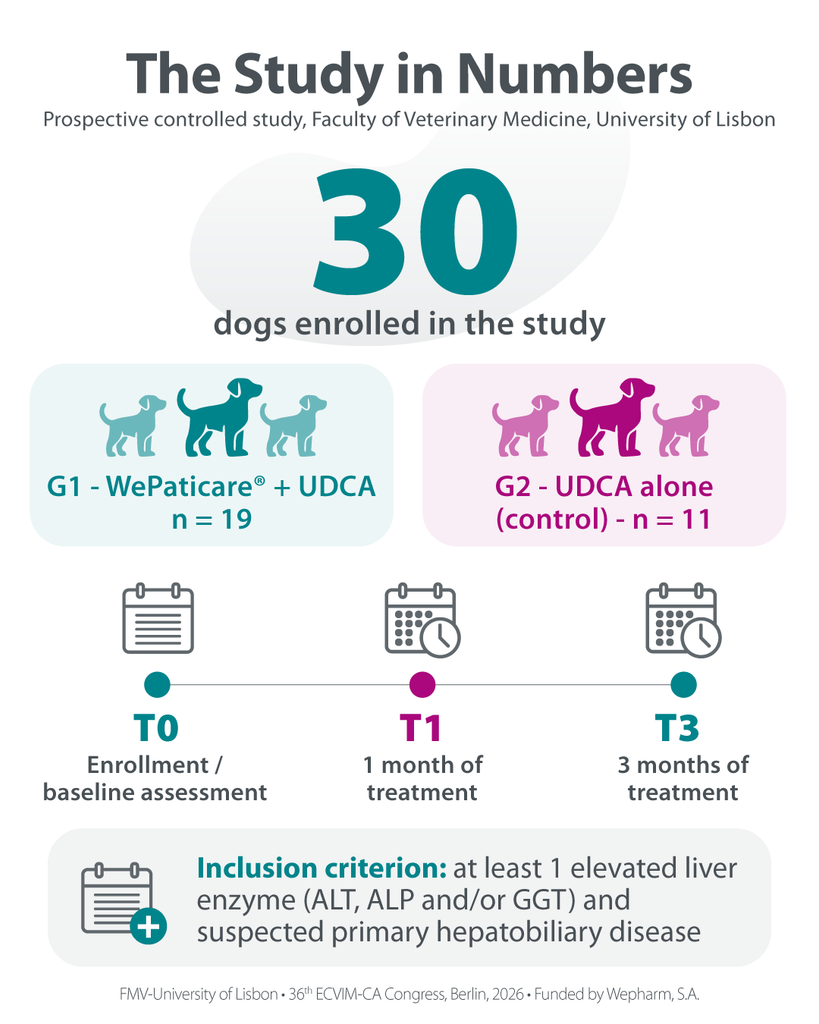
The study took place at the Veterinary Teaching Hospital of the University of Lisbon, with recruitment between March and September 2025. It enrolled dogs with at least one elevated liver enzyme (ALT, ALP and/or GGT) and suspected primary hepatobiliary disease, supported by abdominal imaging.
The 30 dogs were split into two groups:
- G1: WePaticare® + UDCA (n = 19)
- G2: UDCA alone, as an active control (n = 11)
Bloodwork was repeated at 1 and 3 months of treatment and compared with baseline values.

Key results
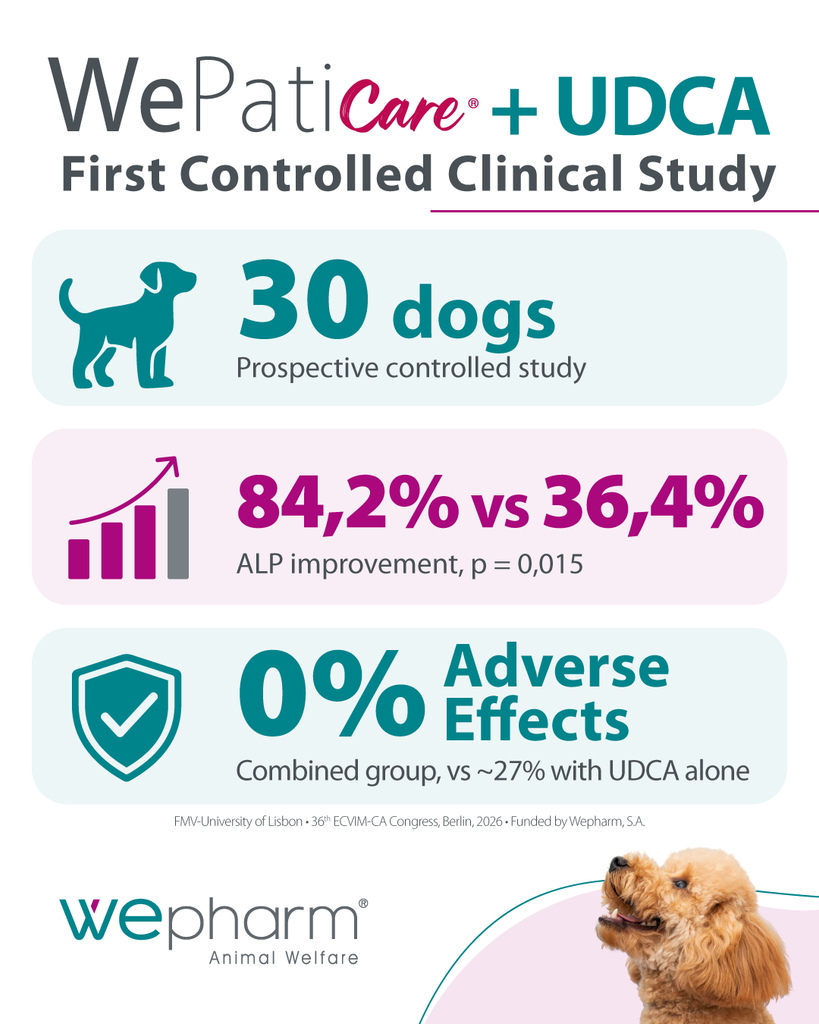
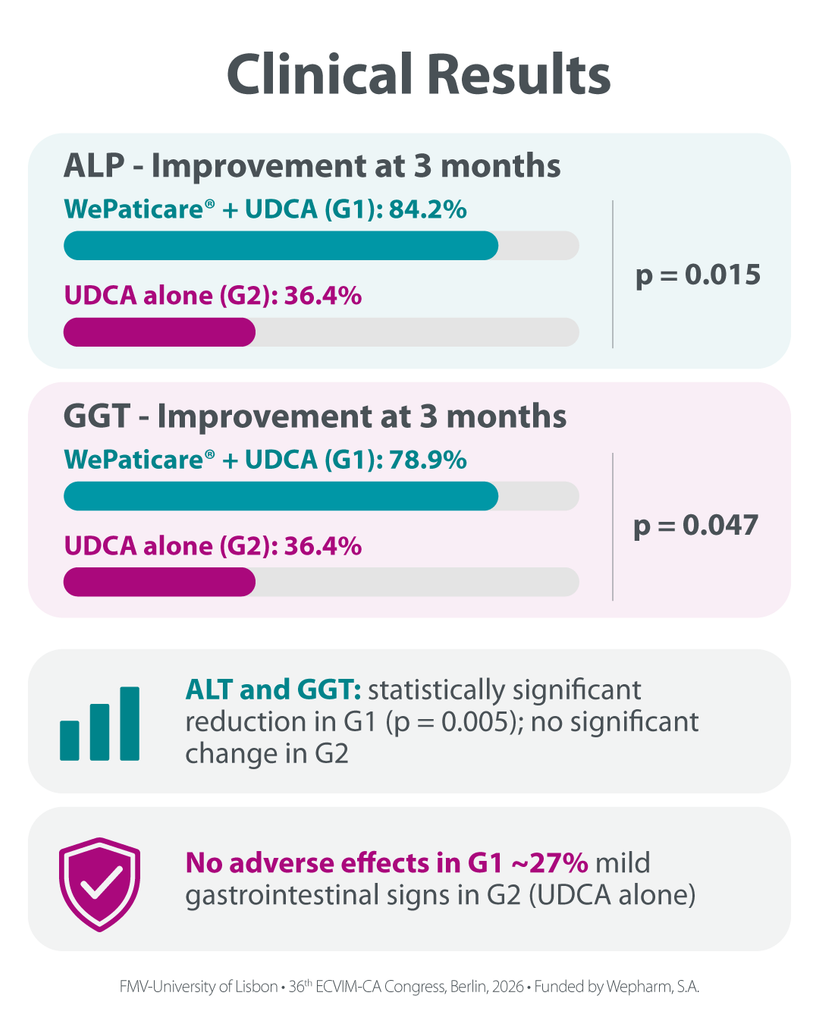
- ALP: 84.2% of dogs in the combined group improved, compared with 36.4% in the control group (p = 0.015).
- GGT: 78.9% vs 36.4% (p = 0.047).
- ALT: significant reduction in the combined group (p = 0.005), already visible at month one.
- Control group: none of the six parameters assessed changed significantly.
- Tolerability: no adverse effects in the combined group. With UDCA alone, about 27% of dogs had mild, reversible gastrointestinal signs.
What it means for clinical practice
The results suggest that adding WePaticare® to UDCA may strengthen the biochemical response, particularly when ALT and GGT are the most altered markers. The study positions WePaticare® as an adjunct to UDCA, not an alternative: UDCA remains the backbone of therapy.
The authors hypothesise that the good digestive tolerance in the combined group may reflect WePaticare®’s multimodal formulation, particularly its probiotic component. Future studies will need to confirm this.
About the study
Conducted at the Veterinary Teaching Hospital of the Faculty of Veterinary Medicine, University of Lisbon (CIISA / AL4AnimalS), funded by Wepharm, S.A. (conflict of interest declared by the authors). Authors: Rita Yasemin Moniz Ibrahimoglu, Patrícia Lunet Marques, Ana Isabel Filipe and Rodolfo Oliveira Leal. Presented as a poster at the 36th ECVIM-CA Congress, Berlin, 2026.